

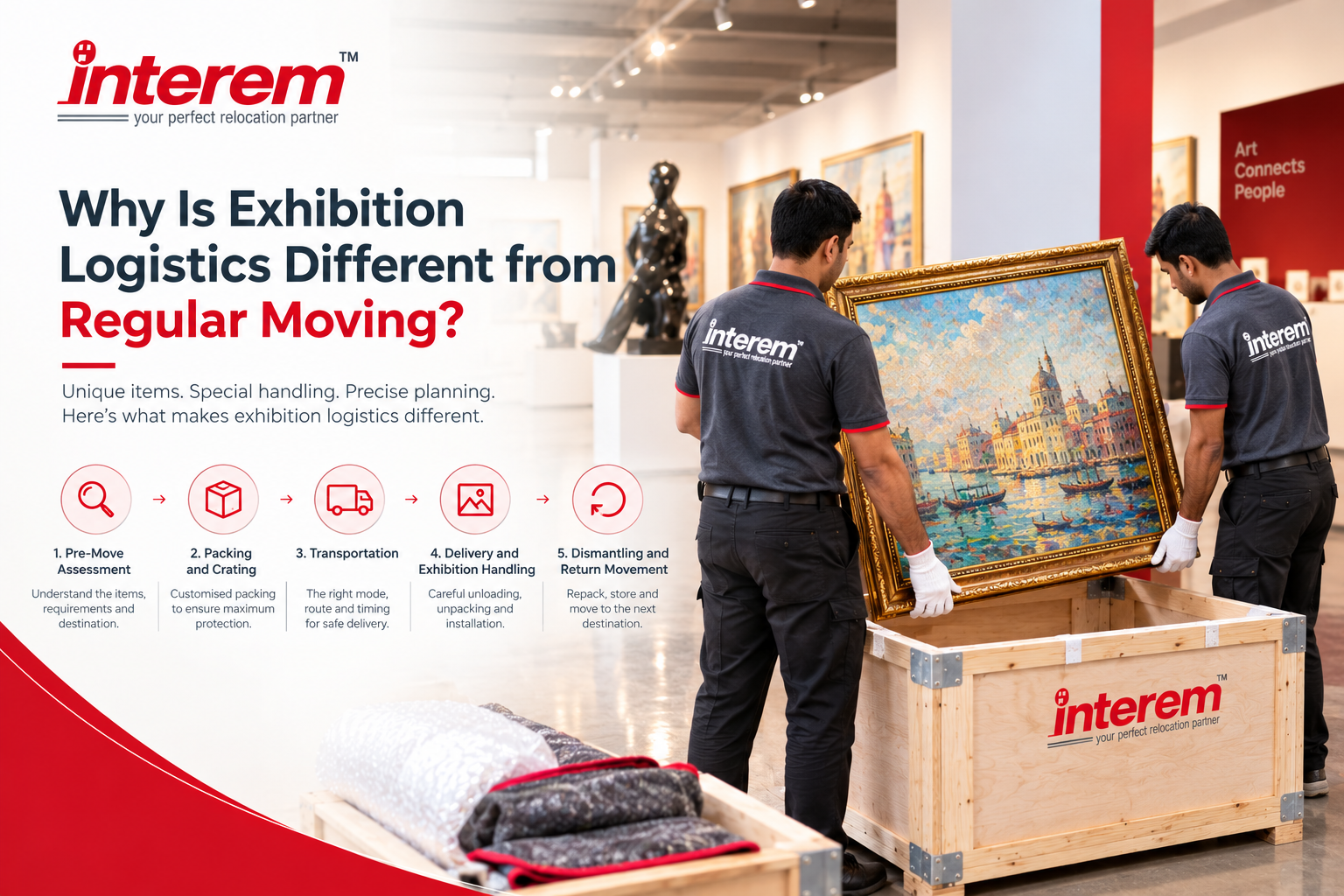
A household move generally involves transporting everyday belongings. Exhibition logistics can involve objects where even minor handling mistakes may result in significant damage.
Paintings, sculptures, antiques, framed works, installations, and other collectibles can have different sensitivities to physical impact, vibration, moisture, temperature, and handling.
Some of the key challenges include:
Fragile and Valuable Objects
Artwork may have considerable financial, cultural, historical, or sentimental value. Handling methods therefore need to be appropriate for the individual object.
Different Packing Requirements
A framed painting may require a different packing approach from a sculpture or a large installation. Standardised packing is not necessarily appropriate for every artwork.
Tight Exhibition Timelines
Exhibitions often operate according to fixed opening and closing dates. Delays in transportation, delivery, unpacking, or installation can affect the exhibition schedule.
Multiple Locations
An exhibition may involve artists, galleries, museums, storage facilities, venues, and transport locations. Coordinating these points requires careful planning.
How Does Exhibition Relocation Work?
A professional exhibition movement typically involves several stages.
1. Pre-Move Assessment
The first step is understanding what needs to be moved. Dimensions, weight, materials, existing condition, handling requirements, and destination conditions can all influence the logistics plan.
An inventory should also be prepared so that each item can be identified and accounted for throughout the movement.
2. Packing and Crating
Artwork should be packed according to its specific requirements. Depending on the object, this can involve protective materials, customised packing, or purpose-built crates.
The objective is to minimise movement and protect the artwork during handling and transportation.
3. Transportation
Once packed, exhibition pieces are transported to the destination using an appropriate transportation arrangement.
The route, distance, timing, vehicle requirements, and handling points should be considered during planning.
4. Delivery and Exhibition Handling
Reaching the venue is not necessarily the final stage. Artwork may need to be carefully unloaded, unpacked, positioned, and installed.
For exhibitions, coordination between logistics teams and venue or installation teams can therefore be important.
5. Dismantling and Return Movement
Once the exhibition concludes, the process may need to be reversed. Artwork may require careful dismantling, repacking, storage, and transportation to its next destination.
What Should You Look for in an Exhibition Logistics Partner?
Choosing an exhibition relocation provider requires more than comparing transportation costs.
Consider the following:
- Fine-art handling experience: Does the provider understand the specific requirements of artworks and collectibles?
- Packing and crating: Can it provide appropriate packing solutions for different types of objects?
- Inventory management: Is there a structured process for identifying and tracking individual pieces?
- Transportation coordination: Can the provider manage the required origin, destination, and movement schedule?
- Storage: Are suitable storage arrangements available when artwork cannot immediately move to its final destination?
- Installation support: If required, can the provider assist with unpacking, positioning, or exhibition handling?
The right combination of services should be determined by the exhibition’s specific requirements rather than simply choosing the provider offering the lowest quotation.
Common Mistakes to Avoid During Exhibition Relocation
Exhibition movements can become more complicated when planning starts too late or responsibilities are unclear.
Avoid these common mistakes:
- Treating artwork like ordinary household or commercial cargo.
- Using generic packing materials without assessing the individual artwork.
- Failing to document the condition of pieces before movement.
- Not preparing a detailed inventory.
- Leaving transportation planning until close to the exhibition date.
- Failing to coordinate delivery and installation schedules with the venue.
- Not planning where artworks will be stored between exhibition stages.
Early planning allows potential handling, transportation, storage, and scheduling requirements to be identified before the movement begins.
Domestic and International Exhibition Relocation
Exhibitions may involve movement within India or across international borders.
Domestic exhibition transportation generally focuses on packing, handling, transportation, delivery, and installation requirements.
International exhibition logistics can involve additional documentation, customs procedures, import and export requirements, and coordination between origin and destination teams. These requirements can vary according to the countries involved and the nature of the artwork.
For international movements, exhibition organisers should clarify responsibilities with their logistics provider well in advance.
Why Choose Interem Relocations?
Interem Relocations provides fine-art and exhibition handling services as part of its specialised relocation portfolio.
Interem’s published services include customised packing and crating, transportation, storage, exhibition handling, display and installation support, and asset tagging and management. The company states that it works with museums, art galleries, auction houses, private collectors, and other clients requiring fine-art logistics.
Interem also offers fine-art storage, with its published storage information describing temperature and humidity control, restricted access, fire suppression systems, viewing areas, and purpose-built storage options.
Its wider relocation network includes domestic and international moving capabilities, allowing exhibition-related requirements to be discussed alongside broader relocation and logistics needs where applicable.
The appropriate solution depends on the artwork, exhibition schedule, origin, destination, handling requirements, and storage needs.
Frequently Asked Questions
1. What are exhibition relocation services?
They are specialised logistics services for moving artworks and exhibition assets, including packing, crating, transportation, storage, exhibition handling, unpacking, and installation support.
2. Why does artwork require specialised packing?
Different artworks have different materials, dimensions, construction, and vulnerabilities. Suitable packing helps reduce the risk of physical damage during handling and transportation.
3. Can exhibition artwork be stored between events?
Yes. Some specialised art logistics providers offer fine-art storage. Storage requirements should be discussed based on the type and sensitivity of the artwork.
4. Can exhibition logistics be handled internationally?
Yes, international exhibition movements can be coordinated, although customs, documentation, import/export requirements, and destination regulations may apply.
5. When should exhibition transportation be planned?
It is advisable to begin planning well before the exhibition date. Early preparation allows sufficient time for assessment, packing, transportation scheduling, documentation, storage, and installation coordination.
Conclusion
Exhibition relocation requires considerably more planning than simply moving objects from one location to another. From assessing individual artworks and preparing appropriate packaging to coordinating transportation, storage, delivery, and installation, every stage can contribute to the safe movement of an exhibition.
For galleries, museums, collectors, artists, and exhibition organisers, selecting an experienced exhibition relocation services company in India can help bring these different requirements together under a structured logistics plan.
If you are planning an upcoming exhibition or moving an existing collection, speak with Interem Relocations to discuss your fine-art and exhibition handling requirements and plan your movement with greater confidence.