
A painting may have a significant monetary value, but for the person who owns it, it’s true value can be deeply personal. It could represent a family legacy, a cherished memory, an artist’s lifetime of work or a piece acquired after years of searching. That is why moving art requires more than transportation, it requires understanding what the asset means to the person who owns it.
This is where professional fine art logistics in India becomes essential.
What Is Fine Art Logistics?
Fine art logistics covers the planning, packing, handling, transportation, storage, and coordination required to move valuable or sensitive artworks safely from one location to another. Unlike standard household or commercial moving, fine art transportation often requires item-specific handling because paintings, sculptures, antiques, collectibles, and exhibition pieces can vary significantly in size, material, fragility, and value.
A professional fine art logistics process may involve:
- Assessing the artwork before movement
- Preparing suitable packing materials
- Customised crating where required
- Labelling and asset identification
- Careful loading and unloading
- Secure transportation
- Storage coordination
- Exhibition or installation support
The objective is not simply to move an artwork from one place to another, but to manage every stage of its journey with appropriate care and planning.
What Makes Fine Art Difficult to Move?
Fine art can be particularly challenging to transport because different pieces respond differently to movement, pressure, vibration, temperature, humidity, and handling.
Some of the main risks include:
- Physical impact during loading or unloading
- Scratches, dents, or surface damage
- Vibration during transportation
- Incorrect packing materials
- Exposure to unsuitable environmental conditions
- Poor handling of fragile frames or sculptures
- Inadequate labelling
- Improper storage
- Damage during installation or unpacking
For this reason, fine art moving should begin with an understanding of the individual artwork rather than applying the same packing and handling method to every item.
Why Fine Art Requires Specialist Handling During a Move
Fine art requires specialised handling at every stage of its journey. Paintings, sculptures, antiques and collectibles can be vulnerable to physical impact, vibration and environmental changes. Even the smallest lapse in handling can have lasting consequences.
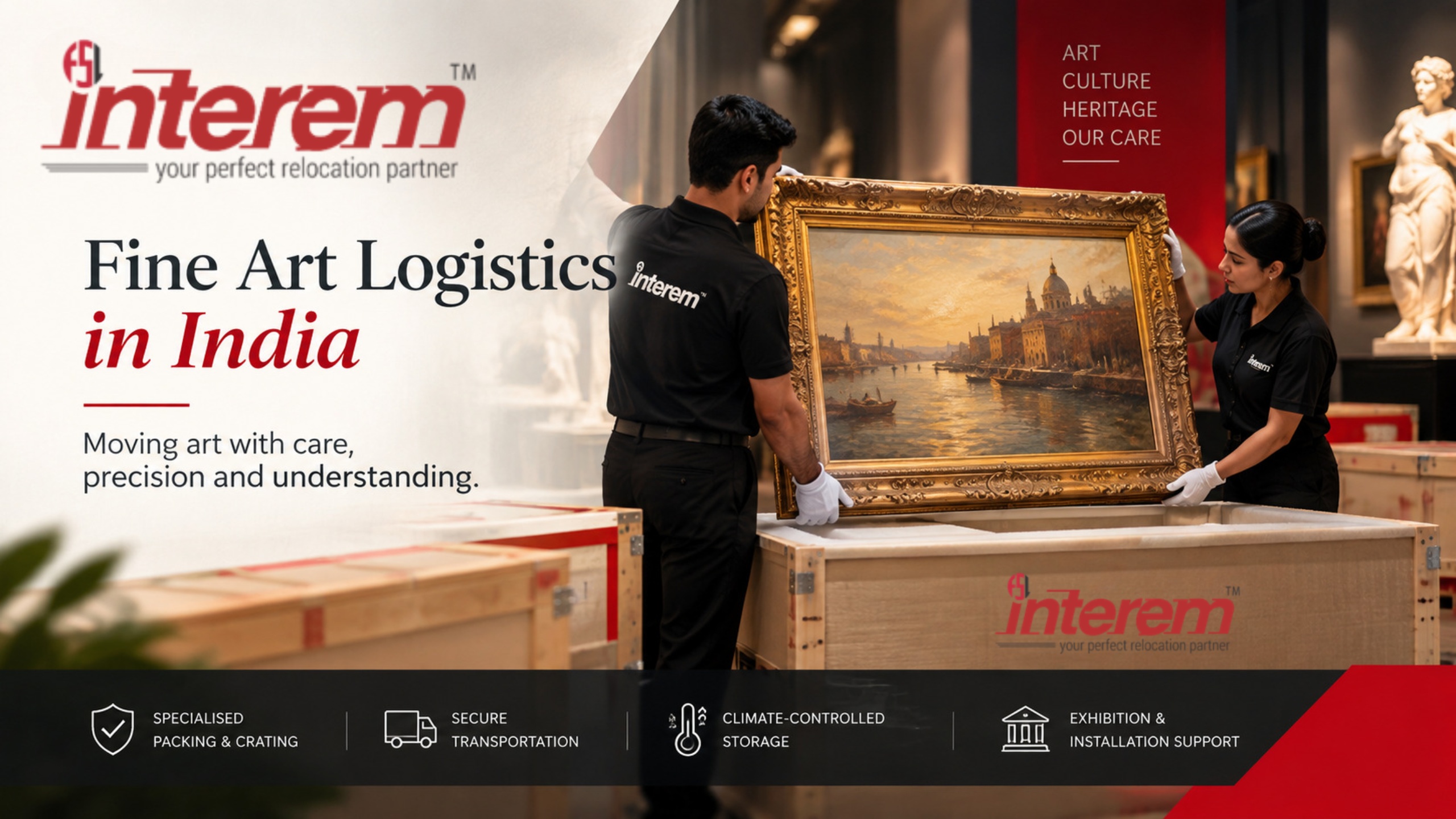
At Interem, fine art handling is approached with this understanding. The team provides customised packing and crating, careful handling, transportation, storage and exhibition support, with each artwork treated according to its individual requirements.
How Paintings, Sculptures and Antiques Are Prepared for Moving
Different types of artwork may require different preparation before transportation. A framed painting, large sculpture, antique object, or delicate collectible may each present unique handling challenges.
Before an artwork is moved, the relocation services process may consider:
- Dimensions and weight
- Material and construction
- Fragile or protruding components
- Existing condition
- Type of frame or mounting
- Packing requirements
- Loading requirements
- Storage or destination conditions
Careful preparation helps ensure that the appropriate handling and packing approach is selected before the artwork leaves its original location.
How Fine Art Is Protected During Packing, Transport and Storage
Interem understands that every artwork has a story attached to it. Its fine art services are designed around protecting not only the physical piece, but also the sentiment, legacy and trust placed in the people handling it.
From specialised packing and crating to asset tagging, transportation and storage, Interem manages the journey with a focus on precision and protection. Its fine art storage solutions also include controlled temperature and humidity environments for sensitive artworks.
Key Risks During Fine Art Transportation
Moving valuable art involves several risks that need to be considered during planning.
Common risks can include:
- Improper lifting or handling
- Inadequate packaging
- Movement inside packaging
- Vibration during road transport
- Incorrect loading positions
- Sudden impact
- Delays during transit
- Environmental changes
- Poor inventory control
- Mishandling during unpacking
A structured fine art logistics process helps reduce these risks through planning, suitable packing, controlled handling, and careful coordination throughout the journey.
Fine Art Transportation for Private Collections, Galleries and Exhibitions
Whether a collector is moving a single prized painting or a gallery is preparing for an exhibition, the logistics can be complex. Interem supports art exhibition transportation with services spanning packing, crating, transportation, exhibition handling, installation and storage.
Its experienced teams can coordinate the movement of individual works as well as complete collections, helping galleries, museums, auction houses and private collectors manage their art assets with confidence.
When What You’re Moving Means More
The right fine art logistics partner doesn’t simply ask, “How do we move this?”
They ask, “How do we make sure this reaches its destination exactly as it deserves to?”
With Interem, fine art moving is built around that philosophy, combining specialised expertise, careful planning and a genuine understanding of the emotions attached to every piece.
Because when you’re moving art, you’re not just moving an asset. You’re moving a story.
Why Choose Interem Relocations for Fine Art Handling?
Fine art moving requires a combination of planning, careful handling, suitable packing, transportation coordination, and an understanding of the individual artwork.
Based on the client’s existing draft, Interem’s fine art support includes:
- Customised packing and crating
- Careful handling of valuable artwork
- Asset tagging
- Transportation
- Storage support
- Exhibition handling
- Installation support
- Support for private collectors, galleries, museums, and auction houses
By bringing these requirements together under a structured relocation process, Interem relocations helps manage the movement of individual artworks as well as larger collections with greater care and coordination.
Conclusion: Moving More Than an Asset
Fine art logistics requires more than standard transportation. Every artwork can have different physical characteristics, values, handling requirements, and emotional significance.
From packing and custom crating to transportation, storage, exhibition handling, and delivery, each stage should be planned around the specific needs of the artwork.
For collectors, galleries, museums, and other organisations, choosing experienced fine art handling support can help reduce risk and make the movement more organised from beginning to end.
FAQs
1. What is fine art logistics?
Fine art logistics involves the careful planning, packing, handling, transportation, storage, and coordination required to move paintings, sculptures, antiques, collectibles, and other valuable artworks safely.
2. How should valuable paintings be packed for moving?
Valuable paintings should be packed according to their size, frame, material, and fragility. Protective wrapping, edge protection, cushioning, and custom crating may be used where required.
3. Why is custom crating important for fine art transportation?
Custom crating can provide additional protection for fragile or high-value artwork by reducing movement and helping protect the piece from impact during handling and transportation.
4. Can sculptures and antiques be transported safely?
Yes. Sculptures and antiques can be moved safely when their dimensions, weight, materials, fragile components, packing requirements, and handling needs are assessed before transportation.
5. What are the main risks when transporting fine art?
Common risks include physical impact, vibration, poor handling, unsuitable packing, environmental changes, inadequate labelling, and damage during loading, unloading, or installation.
6. Can fine art be stored during relocation?
Yes. Artwork may require temporary storage before delivery, installation, or exhibition. Storage requirements can vary depending on the type of artwork and its sensitivity to temperature, humidity, and handling conditions.